
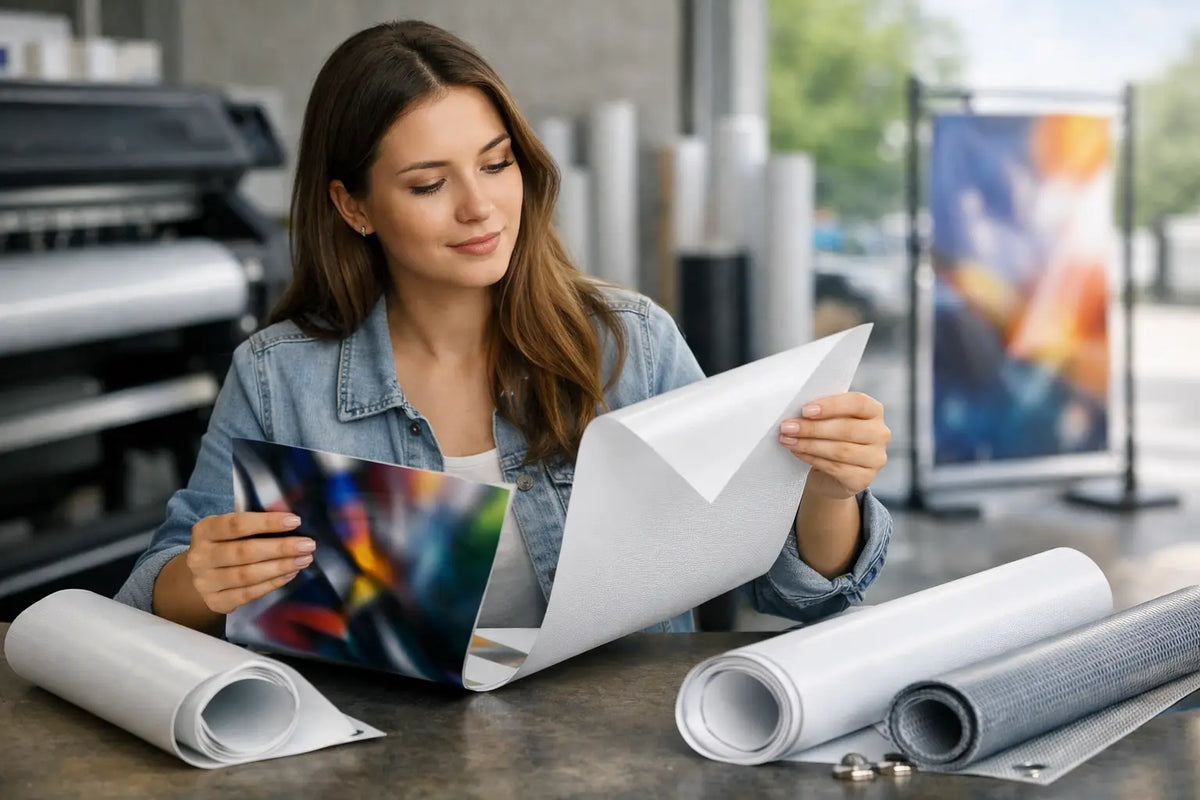
A banner that looks excellent on screen can still disappoint if the material is wrong for the job. Knowing how to choose banner material means thinking beyond size and artwork: where it will hang, how long it needs to last, how it will be fixed, and what weather or handling it will face all affect the right choice.
For a one-day school fair, a lightweight indoor display may be all you need. For a shop frontage, building site or recurring outdoor promotion, durability and wind performance matter far more. The best banner is not necessarily the heaviest or most expensive option - it is the one suited to the real conditions it will work in.
How to choose banner material by location
Start with the banner's location. Indoor and outdoor environments place very different demands on printed materials.
Indoor banners: prioritise finish and presentation
Indoors, a banner is protected from rain, high winds and prolonged UV exposure. This gives you more freedom to choose materials that look sharp, lie flat and are easy to transport. Smooth PVC vinyl is a dependable choice for indoor promotional banners, retail displays, exhibition graphics and point-of-sale messaging. It produces strong colours, clear detail and a professional finish at a sensible cost.
For exhibitions, reception areas and events, fabric banner materials can offer a softer, more premium appearance. They are particularly useful where glare from lighting could be a problem, or where the banner will be viewed up close in a polished setting. Fabric can also be easier to fold and carry than rigid display materials, although it may not suit every fixing method or outdoor application.
If the display needs to stand on its own, the banner material must match the hardware. Roller banner systems, for example, require a stable, curl-resistant material designed to retract cleanly into the base. Using ordinary banner vinyl in the wrong cassette can lead to a poor fit, visible curling or premature wear.
Outdoor banners: prioritise strength and wind flow
Outdoor use calls for a more practical assessment. Standard PVC banner vinyl is a popular all-round material for outdoor advertising because it is durable, weather-resistant and easy to finish with eyelets or reinforced hems. It works well for fence banners, event signage, temporary offers, sports club promotions and building displays.
The challenge is wind. A solid PVC banner acts like a sail when it is installed across an exposed fence, scaffold or wall. In a sheltered town-centre location, this may be manageable with suitable fixings. On an open site or a windy roadside position, however, the pressure can strain both the banner and the structure holding it.
Mesh banner material is often the better answer in exposed areas. Its small perforations allow air to pass through, reducing wind loading while keeping the printed message visible from a normal viewing distance. The print will not appear quite as solid close up as standard vinyl, but that is usually a worthwhile trade-off for safer, longer-lasting outdoor display.
Match the material to the lifespan you need
A banner for a weekend sale and one for a permanent trading estate sign should not be specified in the same way. Be realistic about the intended lifespan before ordering.
Short-term banners can focus on value and speed. Standard PVC is suitable for many campaigns, openings, charity events and seasonal promotions. With correct installation and reasonable care, it can continue looking good well beyond a single event.
For longer-term outdoor use, consider not only the banner stock but also the finishing. Reinforced hems add strength around the edges, while properly spaced eyelets help distribute tension. A banner pulled tight from only a few corners is more likely to tear, crease or fail in poor weather. Larger banners need more fixing points than smaller ones, particularly if they are placed high up or in an exposed position.
UV resistance is another consideration. Outdoor inks and materials are made to withstand daylight, but no printed product remains unchanged forever under constant sun, rain and frost. If your campaign will run for many months, ask about the most suitable material and finish for the location rather than choosing solely by the lowest starting price.
Think about viewing distance and print finish
Banner material affects how artwork is seen. The finish may be gloss, matt or somewhere between the two, and each has a place.
Glossy PVC gives colours extra punch and can make bold promotional artwork stand out. It suits banners with simple, high-contrast graphics that need attention from a distance. The downside is reflection: shop lighting, exhibition lighting or direct sunlight can create glare that makes small text harder to read from certain angles.
Matt finishes reduce glare and tend to look more refined in close-viewing settings. They are often a strong choice for indoor displays, professional service businesses, hospitality venues and photographic graphics. If your banner includes detailed images, subtle colours or lots of information, a matt surface can make it easier to read.
Material cannot compensate for artwork designed at the wrong scale. A banner viewed from across a car park needs fewer words and larger type than one displayed behind a reception desk. Keep key information prominent: your business name, offer, date, location or contact method should be understood in seconds. Fine print may be technically printable, but that does not make it useful.
Choose the right finishing and fixing method
The edge finish is part of the banner specification, not an afterthought. It determines how safely and neatly the banner can be installed.
Eyelets are the most common option for PVC banners. These metal rings allow the banner to be tied to fencing, railings, walls or frames using cable ties, bungee cords or rope. They are flexible and practical, but they need to be used correctly. Do not over-tighten the banner, and avoid using thin string that can cut into the eyelets or place uneven force on the edges.
Hemmed edges are recommended where greater strength is required. The material is folded and sealed at the perimeter to reinforce it before eyelets are fitted. This is particularly worthwhile for large-format banners, outdoor installations and any display expected to be reused.
Pole pockets are useful when a banner needs to slide over a rail or hang from poles. They create a cleaner presentation for stage backdrops, school displays, exhibitions and street-banner systems, but they need to be specified for the actual pole diameter and installation method. A pocket that is too narrow is unusable; one that is too wide may sag.
For wall-mounted graphics, consider whether a banner is truly the best format. A lightweight banner may suit temporary messages, while a rigid board can provide a flatter, more permanent sign. The material choice should support the installation, not force you into awkward fitting compromises.
Common banner material mistakes to avoid
Most banner problems happen before production, when practical details are overlooked. Avoid these five mistakes:
- Choosing solid vinyl for a very windy, exposed fence when mesh would reduce pressure.
- Ordering a lightweight display material for repeated outdoor use.
- Using too few eyelets or fixing points on a large banner.
- Designing small text for a banner intended to be read from a distance.
- Selecting a glossy finish for a brightly lit indoor space without considering glare.
Get practical advice before committing
If you are ordering for a busy event, a new shop opening or a site deadline, bring the practical details to the conversation: the display location, finished size, dates, fixing method and whether the area is sheltered or exposed. A photograph of the intended position can be helpful too.
At Instant Print NI, the team can help customers match material, print finish and fixing options to the job, whether it is a short-run event banner or a larger commercial display. That local, hands-on support is especially useful when a deadline is close and there is little room for trial and error.
Choose for the conditions your banner will face, not simply for the image you want it to show. When the material, finish and fixings work together, your message stays clear, your display looks professional and you can put it up with confidence.