
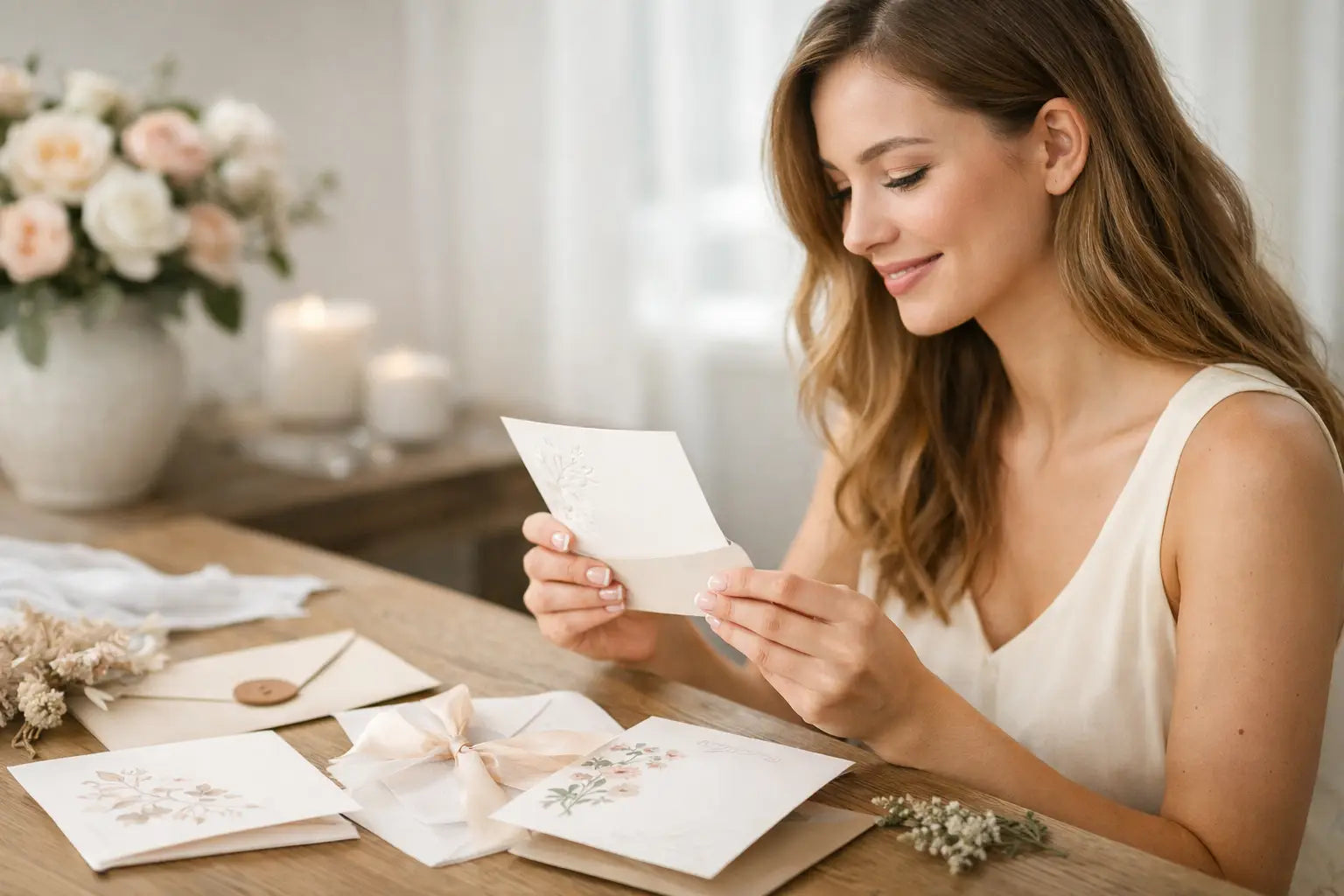
Your invitation is the first proper glimpse guests get of the day you are planning. Before they see the venue, flowers or cake, they will hold a piece of it in their hands. That is why wedding invitation printing deserves more thought than simply choosing a pretty template and pressing order.
The best results come from matching the design, card, finish and wording to your celebration - then allowing enough time for proofs, printing, addressing and post. Whether you are planning a small family wedding in Northern Ireland or a larger celebration with guests travelling from across the UK and Ireland, a well-produced invitation makes the practical details easy to find and the occasion feel considered.
Start with the information guests actually need
A beautiful invitation that leaves guests unsure where to be or when to reply creates unnecessary questions. Set the wording before you settle the layout, especially if you are ordering matching RSVP cards, information slips, menus or place names.
At minimum, include the names of the couple, the date, ceremony time, venue name and location, plus a clear RSVP deadline and contact method. If the reception is at a different venue, state that plainly rather than relying on guests to infer it. Evening-only invitations need their own wording and timings too.
An information card is often the cleanest answer when there is more to explain. It can cover accommodation, transport, dietary requirements, a dress code, children, gifts or directions. This keeps the main invite uncluttered and gives guests one useful place to check the finer details.
Check every name, postcode, date and time before artwork goes to print. Ask one person who has not been immersed in the planning to read it as a guest would. Fresh eyes catch surprising errors, particularly where venue names, RSVP dates and web addresses are concerned.
Wedding invitation printing: choose card before finishes
The feel of the card carries as much weight as the design. A delicate line drawing can look refined on a lightly textured stock, while a bold modern layout often suits a smooth uncoated card or a clean silk finish. Do not select a finish just because it looks impressive on screen. Think about how the invitation will be handled, written on and photographed.
For most wedding invitations, a substantial card gives a reassuring, premium feel without becoming awkward to post. The exact weight and stock depend on the format and finishing method, so it is worth discussing this if you have a particular look in mind. A folded invitation, for example, needs a suitable score to avoid cracking along the fold.
There are four common directions, each with a different practical benefit:
- Uncoated card has a natural, tactile surface and works particularly well for understated, rustic or stationery-led designs. It is also easier to write on.
- Silk card has a smooth, smart finish that suits sharp typography, colour blocks and contemporary artwork.
- Textured card adds character without adding extra printed decoration. It can complement botanical, formal or heritage-inspired designs.
- Foil, embossing or raised details create a memorable focal point, but add cost and may extend production time. They are most effective when used with restraint.
Consider the envelope as part of the design
An envelope protects the invitation, but it also sets expectations. A coloured envelope can make a simple invitation feel more distinctive; a neutral envelope can keep the overall look formal and timeless. Make sure the envelope is large enough for the finished invitation and any inserts, without forcing corners to bend.
If you plan to print guest addresses, prepare your data carefully. Use one consistent format, separate house number from street name where possible, and check postcodes. For a more personal approach, hand-addressing can look lovely, but allow realistic time - particularly if you have a long guest list.
Get the size and layout working together
A5 is a familiar, practical choice, but it is not the only option. Square invitations can feel special, while a slim portrait format suits modern typography and concise wording. The trade-off is that non-standard sizes may need specialist envelopes or cost more to post.
Keep key details away from the edges. Printers need a small trim allowance around the artwork, known as bleed, so colours and images reach the edge cleanly after cutting. Fine borders need extra care too: if they sit very close to the trim edge, even a tiny movement during finishing can make them appear uneven.
Photographs can work beautifully, particularly for relaxed celebrations or save-the-date cards, but only if the image is high resolution and bright enough for print. A picture that looks fine on a phone may reproduce dark or soft on card. Avoid screenshots, compressed social media images and artwork copied from online sources.
For supplied designs, use the printer's artwork guide or template from the start. It is far quicker to build the file to the correct size than to repair missing bleed, low-resolution images or unsuitable fonts at the final stage. If design files feel like another job on an already long list, using an in-house design service can remove that pressure and give you a professional check before production.
Order quantities with a sensible buffer
Do not order one invitation for every person you expect to attend. Couples and households generally receive one between them, while some guests may need separate invitations for day and evening arrangements. Start with an accurate mailing list, then add spare copies for late additions, keepsakes, damaged envelopes and parents who would like one to retain.
Ordering too few is one of the most common and avoidable mistakes. A short reprint may have a higher unit cost, and a second batch can vary slightly if a particular stock or finish is no longer available. A modest buffer is usually better value and gives you room to change your mind.
The same applies to matching pieces. Count menus by place setting, place names by guest, and order-of-service sheets by person. For welcome signs and seating plans, confirm the final guest list before committing to print. Names change, guests decline and table plans have a habit of moving at the last minute.
Build a timeline that leaves room to breathe
Save-the-dates are often sent six to 12 months before the wedding, especially where guests need to arrange travel or accommodation. Invitations commonly go out around three to six months beforehand. The right timing depends on the wedding date, destination, guest list and how much information is finalised.
Work backwards from your intended posting date. Leave time for artwork approval, any design amendments, printing, finishing, delivery, envelope addressing and a final check. Premium processes and bespoke formats may need longer than straightforward digital printing, while a simple card invitation can often be turned around much more quickly.
If time is tight, simplify the specification rather than rushing the proofing stage. A clean, well-printed invitation on a suitable card will always feel better than an elaborate design with an error in the date. For urgent requirements, speak to the printer early and be clear about your deadline. A local production partner such as Instant Print NI can advise what is achievable and help keep decisions moving.
Proof properly before you approve
A digital proof is essential, but it cannot always show the exact texture, weight or colour of the finished card. Colours also appear differently on screens, which vary in brightness and calibration. If a specific shade matters - perhaps you are matching bridesmaid dresses or venue styling - ask about a printed sample or proof where available.
Read the proof in stages. First check the factual details, then read the wording aloud, then inspect alignment, spacing and punctuation. Finally, view it at actual size if possible. Tiny text that seems acceptable on a large monitor may be difficult for older guests to read when printed.
Once everything is approved, keep a copy of the final artwork and order details. It makes reordering matching stationery much easier later, whether you need thank-you cards, extra menus or a sign for the reception.
A good invitation does more than announce a date. It gives guests confidence that the day will be welcoming, organised and unmistakably yours. Choose materials you like, protect enough time for the details, and let the finished card be something worth keeping.