
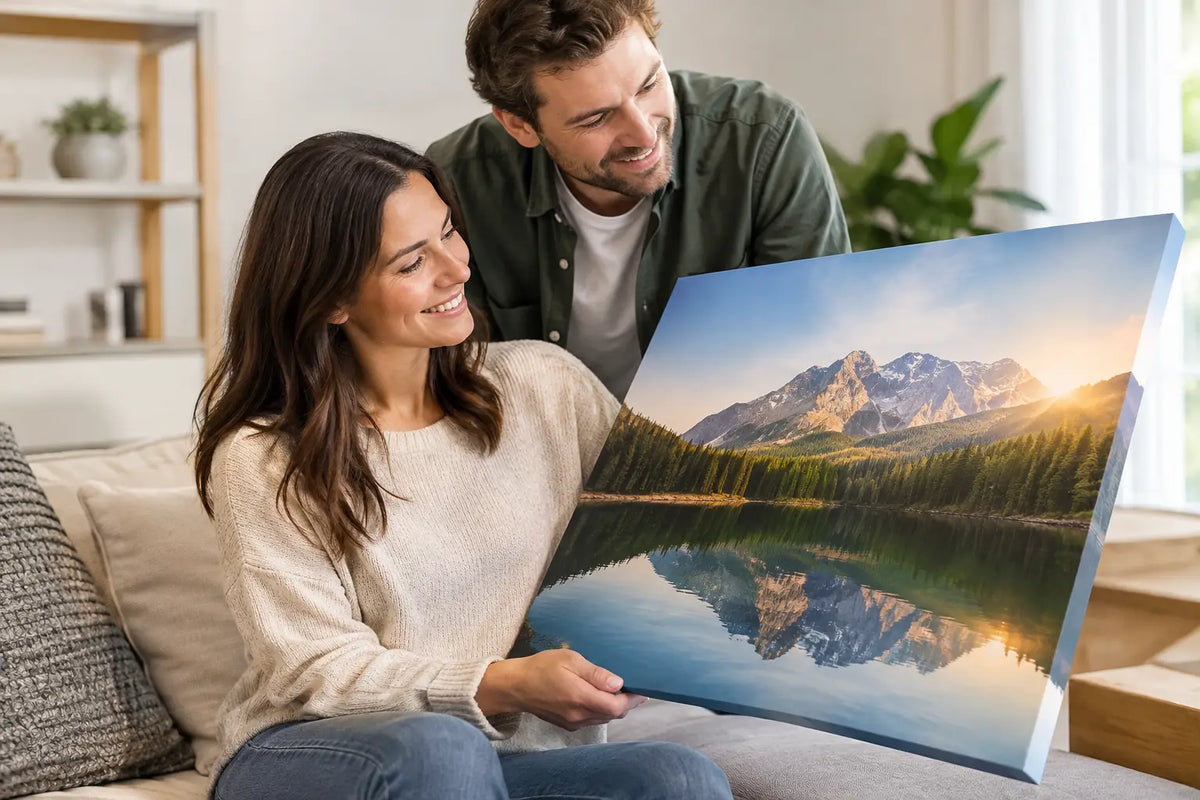
A canvas can turn a favourite family photograph, a wedding image or a striking landscape into a feature piece for a room. But canvas print quality is not decided by the image alone. It comes from the way the artwork is prepared, printed, stretched and finished - with each stage affecting how sharp, colourful and long-lasting the result will be.
For a canvas that looks considered rather than simply enlarged, it pays to understand what sits behind the finished piece. Here is what to look for before you order, whether you are creating one personal photo canvas or preparing artwork for a hospitality venue, office or retail space.
What determines canvas print quality?
A good canvas print should look clear at normal viewing distance, hold natural detail in highlights and shadows, and sit flat and secure on its frame. It should also have colours that suit the original image and a finish that feels purposeful in the space where it will hang.
The photograph, print method, canvas material, ink set and frame all have a role to play. There is no single specification that suits every image. A close-up portrait can carry softer background detail beautifully, while a wide landscape needs enough information across the whole scene to avoid looking weak when enlarged. The best approach is to match the file and finish to the intended size.
Start with an image that can be enlarged
File resolution is often the first limitation. A photograph may look excellent on a phone but contain too few pixels for a large wall canvas. When it is enlarged beyond what the file can support, edges can appear soft, fine textures disappear and faces may lose definition.
As a practical guide, use the original image file wherever possible. Photos sent through messaging apps, copied from social media or saved repeatedly are commonly compressed. They are useful for viewing, but not always for print. A file taken directly from a modern phone can work well for many standard canvas sizes, while a professionally shot image or camera original gives more headroom for larger formats.
Pixel dimensions matter more than the file size shown in megabytes. A larger pixel count gives the printer more image information to work with. If you are unsure, send the file for a check before committing to the biggest size. A small adjustment to the canvas dimensions can make the difference between an acceptable result and a crisp one.
Good editing protects the character of the photo
A screen is backlit, so an image can appear brighter and more saturated than it will on canvas. Canvas also has a textured surface, which gives it warmth and character but will not reproduce ultra-fine detail in the same way as glossy photo paper.
Avoid pushing brightness, contrast or sharpening too far before ordering. Heavy edits can create harsh skin tones, blocked-up dark areas and visible halos around subjects. A modest adjustment is usually more effective, particularly for images taken indoors or on a dull day.
Cropping deserves the same care. The visible front of a canvas is not the only area required: part of the image may wrap around the sides of the frame. Keep faces, hands, text and other important details away from the outer edges unless you have deliberately chosen a mirrored or coloured edge treatment. This is especially relevant for wedding photos, group images and branded wall displays.
Canvas print quality relies on the materials
The material is not just a backing for the picture. Its weave, weight and coating influence colour, detail and durability. A quality canvas should accept ink evenly so that solid colours look consistent and image areas do not appear patchy. It should also have enough body to stretch cleanly without sagging prematurely.
Pigment-based inks are valued for their strong colour reproduction and resistance to fading when a print is displayed in sensible conditions. They help retain subtle tones in skies, skin and shaded areas, rather than reducing an image to flat blocks of colour. The aim is not always the most vivid possible print. For portraits and interiors, accurate, balanced colour often gives a more premium result.
Frame construction matters too. A canvas should be stretched evenly over a sturdy wooden frame, with neat corners and a taut face. Poor tension can show as ripples or a loose centre. A deeper frame creates a more substantial wall piece and gives the wrapped edges greater presence, while a slimmer frame may suit smaller prints or gallery-style groupings. Neither is automatically better - it depends on the room and the visual effect you want.
Choosing the right size for the space
The largest canvas is not necessarily the strongest choice. In a living room, reception area or restaurant, a print needs enough scale to hold its own on the wall, but it should not overwhelm nearby furniture or signage. Measure the available area first and consider the viewing distance.
A detailed image can look very impressive at a larger size when it will be viewed from a few steps back. Conversely, a low-resolution image often works better as a smaller canvas, where its softness is less noticeable. For a gallery wall, several consistent canvases can tell a fuller story than one oversized image.
If your artwork includes lettering, maps, logos or technical detail, treat it differently from a photograph. Text needs to be properly sized and kept away from the wrapped edges. Use a high-resolution logo or vector artwork where available, and check the final proof carefully. What is legible on a laptop may be difficult to read from across a room.
Colour expectations and proofing
Different screens display colour differently. A bright phone screen, an uncalibrated office monitor and a printed canvas will not match perfectly. This is normal, not a production fault. The useful question is whether the print looks balanced, natural and right for the image.
When colour is critical, particularly for business interiors, artwork reproduction or a coordinated event display, ask for a proofing option or speak to the production team before printing. This gives you a chance to identify concerns around brand colours, shadows or cropping early, when changes are straightforward.
It is also worth thinking about the room's lighting. Warm lamps can make whites appear creamier and cool daylight can make blues feel stronger. Place the canvas away from persistent direct sunlight where possible. Even durable inks and quality materials benefit from sensible positioning.
Preparing artwork before you order
A few simple checks prevent most avoidable issues. Use the original file, review the crop at the final canvas proportions and inspect the image at 100 per cent on screen. Look for blur, compression marks, unwanted objects and areas that are very dark or very bright.
For artwork created in design software, supply it at the correct finished size where possible. Keep text and logos safely inside the front-facing area, and avoid adding a border unless you understand how it will sit around the frame. A border that looks even in a flat preview can become uneven once wrapped.
If you are working from a treasured older photograph, do not assume age rules it out. Careful scanning, restoration and a suitably modest canvas size can produce a lovely result. The right decision may be to preserve the photo's original character rather than trying to force artificial sharpness into it.
Care that keeps a canvas looking its best
Canvas prints are designed for display, not hard wear. Handle them by the frame rather than pressing the printed surface, and use clean hands when hanging them. To remove light dust, a soft, dry microfibre cloth is normally enough. Avoid household sprays, wet cleaning products and abrasive cloths.
Choose a dry indoor location away from steam, splashes and sustained humidity. Kitchens and bathrooms can be challenging unless the canvas is positioned well clear of moisture and heat. If the print is going into a busy commercial setting, consider its exposure to direct sunlight, doors, cooking areas and regular contact from customers.
A canvas should arrive ready to make an impression, not as another production job to solve. At Instant Print NI, checking artwork, material choice and final finish before production helps customers order with greater confidence. If there is any doubt about whether a photo will suit your chosen size, ask before it goes to print. A quick conversation at the preparation stage is the simplest way to protect the finished result.
The best canvas is one that still feels right when you pass it every day: clear enough to enjoy, well made enough to last, and sized for the place it was meant to belong.