
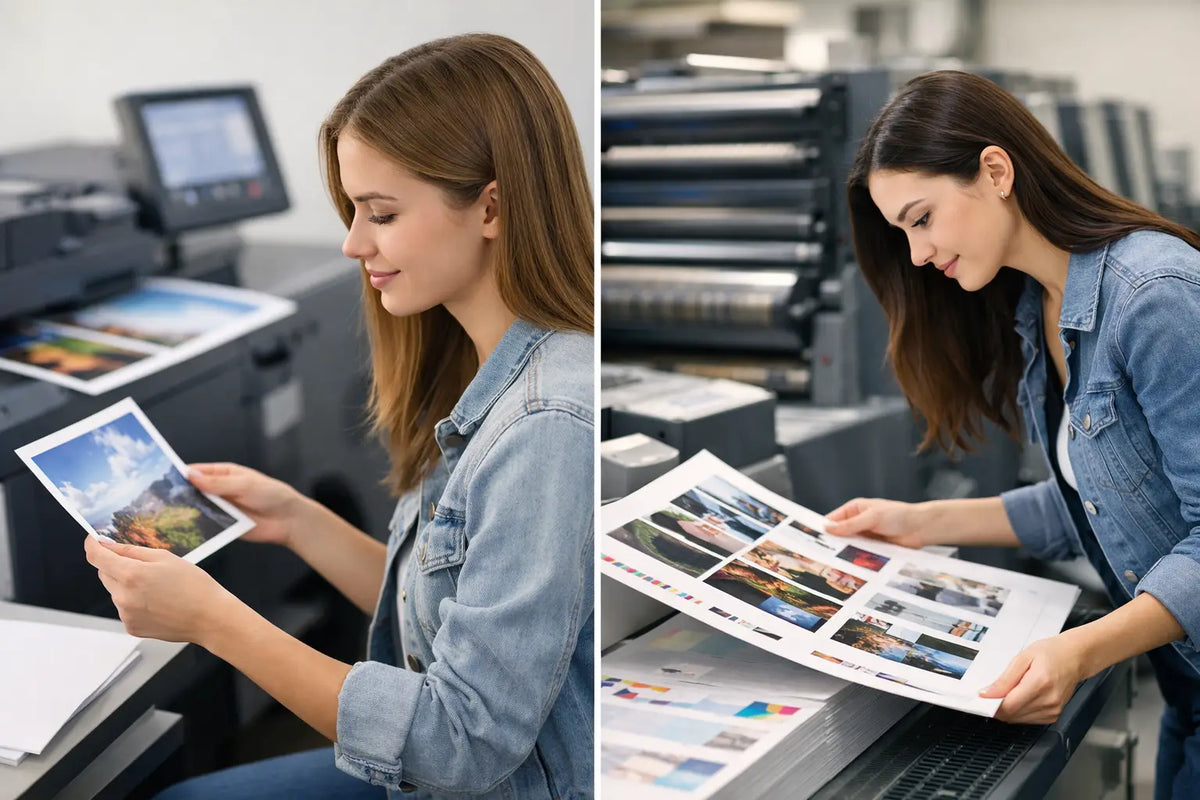
A last-minute set of flyers for a weekend promotion needs a very different print process from 20,000 catalogues for a regional campaign. That is the practical question behind digital versus offset printing: not which method is universally better, but which one gives your particular job the right balance of speed, cost, finish and consistency.
For businesses, schools, clubs and event organisers, choosing well can prevent wasted budget, delayed deadlines and print that does not match expectations. Here is how the two methods work, where each earns its place and what to consider before placing an order.
Digital versus offset printing: the key difference
Digital printing sends your artwork directly from a digital file to the press. There are no printing plates to make, so production can begin quickly once artwork has been checked and approved. It is well suited to business cards, flyers, posters, short-run booklets, invitations, menus, labels and personalised work where every copy may contain different information.
Offset printing uses etched aluminium plates to transfer ink through a series of rollers onto paper or card. Preparing those plates takes more time at the start, but the process becomes highly economical when the quantity rises. It is a longstanding choice for larger runs of leaflets, brochures, letterheads, folders, magazines and other repeat print materials.
Both can produce professional results. The better choice depends on the job in front of you, rather than an assumption that one is always higher quality or lower cost.
When digital printing makes most sense
Digital print is built for flexibility. With little set-up required, it is the sensible option when you need a smaller quantity, have a tight deadline or expect the artwork to change. A café updating seasonal menus, for example, may need 50 copies now and another batch next month. A tradesperson might want a few hundred branded quotation sheets while testing a new service area. In both cases, digital avoids paying for more than is needed.
It is also the natural home for variable data printing. Names, addresses, table numbers, discount codes, membership details or unique QR codes can change from one piece to the next without stopping the press. This is particularly useful for direct mail, wedding invitations, event place names and personalised promotional campaigns.
Turnaround is another major advantage. Once a print-ready file is supplied, digital work can often move through production quickly, making it a strong choice for urgent posters, exhibition graphics, event signage or replacement stationery. Fast production still needs proper artwork checks, finishing time and delivery planning, but it removes the plate-making stage that offset requires.
Digital printing is not limited to plain paper either. Modern equipment can deliver crisp text, strong photographs and vivid colour across a wide choice of stocks. For everyday marketing and operational print, the finish is more than capable of representing a business professionally.
The trade-off with short runs
The unit price of digital print is generally steady. Printing 100 flyers instead of 50 will usually reduce the cost per flyer a little, but it will not fall dramatically. At higher quantities, offset often overtakes it on price because its initial set-up cost is spread across many more copies.
There can also be slight variations between digital output and a previous offset-printed item, particularly with solid brand colours, heavily inked areas or specialist stocks. If exact colour matching is central to your brand, discuss the job before production rather than relying on a screen preview.
Where offset printing delivers value
Offset printing comes into its own when the quantity is high and the artwork is settled. The first copies take longer to prepare because plates must be produced and the press set up. Once it is running, however, offset can print thousands of sheets efficiently and at a lower unit cost than digital.
This makes it a practical route for businesses ordering a year’s supply of branded stationery, retailers distributing large leaflet campaigns, organisations producing catalogues or schools ordering high volumes of prospectuses and information packs. If the same design will be used repeatedly and you have room to store the stock, a larger offset run may offer better value over time.
Offset is also valued for its colour control. It uses conventional inks, including Pantone spot colours where required. That can be particularly useful when a logo colour must reproduce consistently across multiple printed items, from presentation folders and letterheads to packaging and display materials.
The process handles a broad range of paper stocks and specialist finishes, too. Depending on the job, this may include uncoated stationery papers, textured boards, heavyweight covers, metallic inks or particular varnishes. It is a strong option when the physical feel of the piece is part of the message.
The trade-off with offset runs
Offset does not suit every deadline. Plate preparation, make-ready and drying considerations mean it is less suitable for a job needed tomorrow morning. It also makes less financial sense for very small quantities, where set-up can outweigh the saving per sheet.
It is worth being confident in the final artwork before committing to an offset run. Correcting a phone number, price list or opening hour after plates have been made can add cost and delay. For frequently changing information, a smaller digital run is often the safer choice, even if the per-unit price is higher.
Compare cost by total value, not just unit price
It is easy to focus on the cheapest price per leaflet, card or brochure. But the lowest unit price is only useful if you will use every copy. Ordering 10,000 flyers at an excellent offset rate is poor value if a new price, service or contact detail means half of them become obsolete.
Start with a realistic quantity. Consider how quickly your details change, how long the campaign will run, how much storage space you have and whether the print is seasonal. A restaurant preparing for Christmas may need an accurate count of festive menus, while a business exhibiting at several trade events may benefit from a larger run of evergreen brochures.
For short, targeted campaigns, digital print usually keeps risk low. For stable, high-volume materials, offset can lower your overall spend. If the quantity sits in the middle, the most cost-effective method can vary with paper size, stock, number of colours, finishing and deadline. Asking for advice at that point is far better than guessing.
Quality, colour and paper: what customers actually notice
Most recipients will judge printed material by whether it looks sharp, feels considered and carries the right message. Clean text, clear images, accurate trimming and a suitable paper stock matter more than the name of the printing process.
Digital print is excellent for detailed photographs, colourful graphics and short-run marketing pieces. Offset offers exceptional consistency over long runs and can provide more precise control where branded spot colours are essential. Neither removes the need for good artwork. Low-resolution photographs, unsuitable logos and poorly prepared bleed areas can affect the final result whichever press is used.
Paper choice has a major impact as well. A thick silk card can give business cards a polished, contemporary feel. Uncoated stock may be better for forms, letterheads and appointment cards that need to be written on. Gloss can make photographs and bold promotional images stand out, while matt or silk finishes often suit premium brochures and professional stationery.
If colour is critical, supply the correct logo files and flag any Pantone references at the quoting stage. Screens display colour using light, while print uses ink or toner on a physical surface, so an on-screen shade is not a guaranteed production reference.
A practical way to choose your print method
Think first about quantity and timing. A small run needed quickly points towards digital. A large, settled order with a longer lead time is where offset deserves a proper cost comparison.
Then look at the content. Personalised names, numbered tickets, changing offers and multiple versions are digital strengths. A single design repeated in substantial volume is a classic offset job. Finally, consider the finish: if you need a specific spot colour, unusual stock or specialist ink treatment, offset may be the better production route.
For many customers, the answer is not one method for everything. A company might use offset for its annual supply of letterheads and compliment slips, then use digital for monthly promotions, staff business cards and event materials. That approach keeps core stationery economical without losing the flexibility needed for day-to-day marketing.
At Instant Print NI, the most useful starting point is the finished purpose of the item, not the press name. Share the quantity, deadline, artwork, paper preference and any colour requirements, and the production route can be matched to the job rather than forced into a one-size-fits-all option.
The best print choice should leave you with materials that arrive when needed, look right in customers’ hands and support the next sale, event or conversation with confidence.