
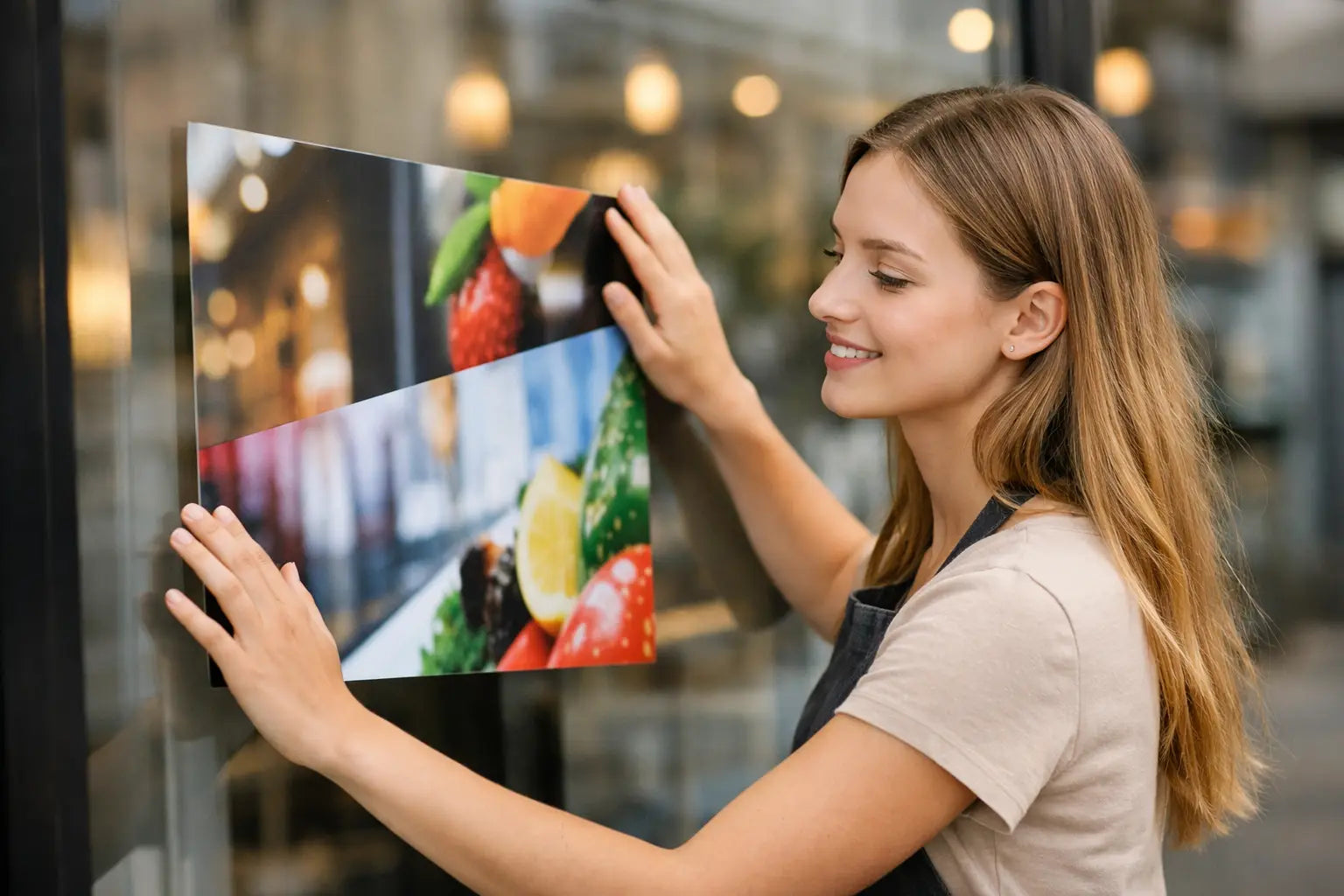
A handwritten notice taped to a window may get a message across, but it rarely gives customers confidence. Foamex signs for shops offer a smarter, longer-lasting way to display prices, opening hours, promotions, directions and essential information at the point where customers need it.
For independent retailers, salons, cafés, trades counters and service businesses, the right sign has a job to do. It must be easy to read at a glance, suit the space and keep looking professional after daily use. Foamex is a practical choice because it delivers a clean printed finish without the weight, cost or installation requirements of heavier signage materials.
Why choose Foamex signs for shops?
Foamex is a rigid PVC foam board, not foam in the soft packaging sense. It has a smooth, flat surface that prints clearly in full colour and holds its shape well. The board is lightweight enough for straightforward fitting, yet substantial enough to feel like proper permanent signage rather than a temporary poster.
That makes it particularly useful for indoor shop displays. A branded price board behind the counter, a list of services in a reception area or a clear returns policy near the till can all be produced on Foamex. It is also widely used for short- to medium-term outdoor displays, particularly when fixed securely in a sheltered location.
The main appeal is value. You can create a professional, durable display at a sensible cost, whether you need a single sign for a new premises or multiple boards across several locations. For shops that update their offers regularly, Foamex also gives you the freedom to replace one panel without reworking an entire fitted display.
Start with the sign's job, not its size
The quickest way to order the wrong sign is to choose dimensions before deciding what the sign needs to achieve. A sign at the entrance has different requirements from one positioned above a product shelf or beside a card machine.
Think about where the customer will stand when reading it. A small countertop board can handle a short message such as "Ask us about delivery" or "Today's special". A window sign viewed from the pavement needs larger type, stronger contrast and far less text. If people have to stop and lean in to read it, the sign is not doing its job.
For most retail applications, one clear purpose per board works best. Use a Foamex sign to direct customers to a collection point, explain a seasonal offer, show opening hours or reinforce a key service. Trying to fit prices, terms, social media details, a logo and five separate messages onto one sign usually creates clutter.
Match the thickness to the setting
Foamex is commonly supplied in a choice of thicknesses. A thinner board is a cost-effective option for short-term indoor promotions, shelf displays and signs that will sit in a frame. It is light, neat and easy to mount.
A thicker board is better where the sign needs more presence, where it will be handled frequently or where it is being fixed directly to a wall. For larger boards, added thickness also helps the sign sit flatter and look more substantial. There is no need to over-specify a small counter sign, but a large opening-hours board on an exterior wall benefits from a sturdier option.
If the sign is going outside, consider the exposure rather than simply calling it an outdoor sign. A board under a canopy faces a very different environment from one on an open roadside frontage. Wind, persistent rain, direct sunlight and the quality of the fixing all affect how long it will look its best.
Design for customers who are moving
Retail signs are often read while someone is walking, carrying bags or waiting in a queue. Your design needs to make the main point obvious within seconds.
Begin with the message customers must see first. For a sale sign, that may be the percentage saving. For a service sign, it could be "Key Cutting", "Collection Here" or "Freshly Made Today". Make this the largest element, then support it with only the details needed to act on the message.
High contrast matters more than decorative effects. Dark lettering on a pale background, or pale lettering on a dark background, is generally easier to read than colours with a similar tone. Brand colours should still be part of the design, but readability comes first. A beautifully branded sign that disappears in a busy shop is wasted print.
Keep logos clear and correctly proportioned, particularly if a sign sits beside other branded material. Use high-resolution images and logos from the outset. A sharp file produces a sharp result; a screenshot copied from a website often does not. If you are unsure about artwork setup, getting a file checked before production can prevent a costly reprint.
Leave room for the sign to breathe
Crowded layouts are a common problem, especially where a business has several points it wants to communicate. White space is not empty space that has been wasted. It gives the message room to stand out and helps customers find the important information quickly.
This is especially useful for practical shop signage such as payment notices, safety information, collection instructions and opening-hours boards. A clear hierarchy of heading, detail and contact information looks considered and makes the sign easier to use.
Where Foamex works best in retail spaces
Foamex is versatile enough to support the everyday running of a shop as well as its promotional activity. It works particularly well for:
- window and entrance signage
- opening-hours and service information boards
- promotional displays and seasonal offers
- point-of-sale boards near tills and counters
- wall-mounted menus, price lists and treatment lists
- directional, collection and queue-management signs
For signs that customers need to update daily, a chalkboard, digital display or poster holder may be more suitable. Foamex is best when the message is stable enough to justify a professionally printed board. It can still support changeable campaigns, but it is most cost-effective when you plan the message and use the board for a meaningful period.
Fixing your shop sign properly
Even a well-designed sign can look poor if it is fitted carelessly. Choose the fixing method around the surface, board size and whether the sign needs to be removed later.
Small indoor boards can be mounted with suitable high-bond tape or adhesive pads on a clean, smooth surface. Larger boards are usually better fixed with screws and sign stand-offs, which provide a neat gap between the wall and the board. Drilled holes can be planned into the artwork so they do not interfere with important text or graphics.
For temporary displays, poster frames, easels and countertop holders may be a better route than direct fixing. They protect the board and make campaign changes simpler. If you are fitting a sign outdoors, make sure it is securely installed and that the board does not have unsupported edges likely to catch the wind.
Make one sign part of a joined-up shop display
The strongest retail environments do not rely on one large sign to explain everything. They use a consistent group of signs, each doing a clear job. Your external window display brings people in; a directional board helps them find the right area; a point-of-sale sign answers common questions before staff need to.
Keeping the same fonts, colours and tone across these pieces makes a smaller business look established and organised. It also saves time when you need a new sign quickly, because the design style is already clear.
At Instant Print NI, shop signs can be produced alongside posters, flyers, window graphics and other printed materials, helping you keep your campaign consistent from the street to the counter. For urgent promotions or a new opening, preparing final artwork early gives you the best chance of meeting a tight turnaround.
A good Foamex sign does not need to shout. It simply gives customers the right information, in the right place, with a finish that shows your business pays attention to the details.